- AI infrastructure
- Industrial strategy
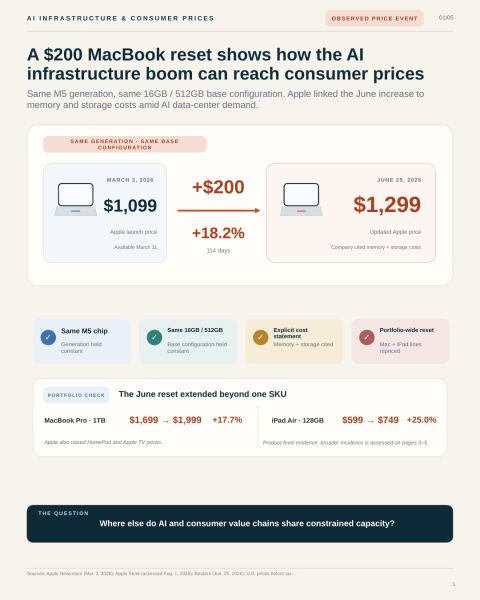
A $200 increase in the price of the same MacBook Air generation is more than a product-pricing story. It is a useful window into how the AI infrastructure boom can reach consumers. In March 2026, Apple launched the base M5 MacBook Air at $1,099. By late June, the same generation and base configuration was priced at $1,299. Apple cited rising memory and storage costs amid surging demand from AI data centers.
The important point is the value-chain mechanism.
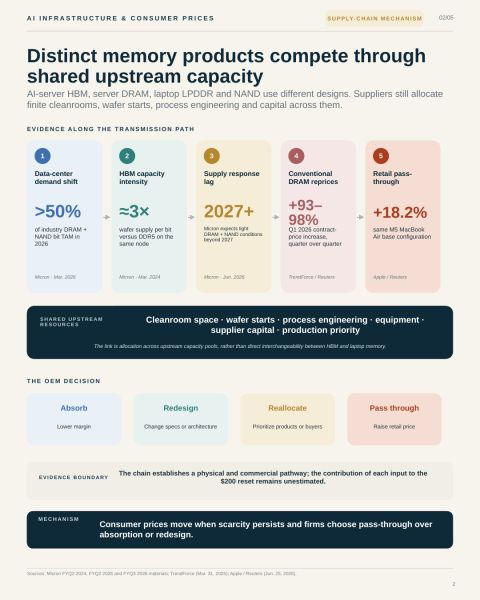
AI servers and consumer devices use different memory products. But they depend on overlapping upstream resources: wafer capacity, cleanrooms, process engineering, production equipment, supplier capital, and allocation decisions across product lines.When AI demand absorbs a larger share of those constrained resources, the pressure can move downstream:
AI infrastructure demand → shared capacity → higher component costs → manufacturer response → consumer price
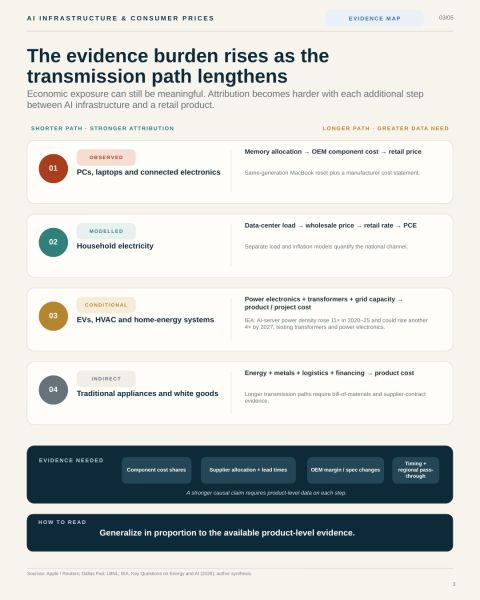
Manufacturers still have choices. They can absorb the cost in margins, redesign products, reallocate supply, delay launches, or pass some of the increase to customers.The effect will vary significantly across industries.The pathway is relatively short for laptops and connected electronics. It is more selective for EVs, HVAC, batteries, and home-energy systems, where power semiconductors, transformers, grid equipment, and metals matter. For traditional appliances, the transmission is more indirect through energy, logistics, factory investment, and financing.
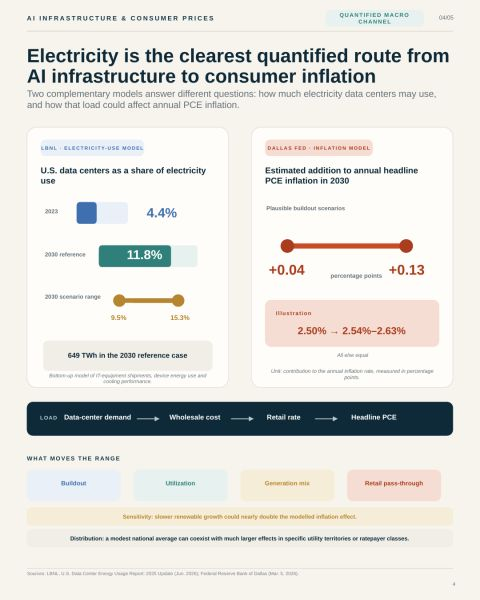
Electricity may be the clearest economy-wide channel. Data-center growth can raise generation and grid requirements, and the eventual consumer impact depends heavily on how those costs are allocated.
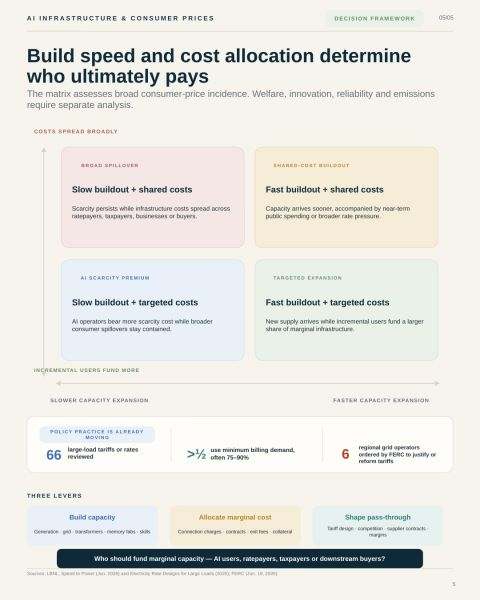
The bigger question is therefore broader than whether AI is inflationary or deflationary:
Where do AI and consumer value chains share constrained capacity?
How quickly can supply expand?
And who ultimately bears the marginal cost—AI users, ratepayers, taxpayers, manufacturers, or consumers?
#AIInfrastructure #Semiconductors #EnergyPolicy #IndustrialStrategy