- Enterprise decisions
- Enterprise AI
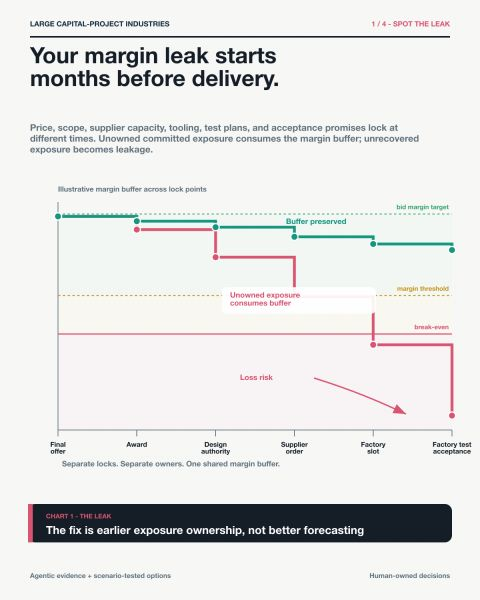
Margin in large capital-project industries rarely disappears in one big failure. It leaks through small commitments made too early: supplier quotes, test requirements, customer-directed changes, currency exposure, tooling decisions, acceptance delays.
The hard part is not expertise. Sales, engineering, finance, supply chain, manufacturing, quality, and program teams all see part of the risk. The problem is that each function sees it at a different time, with a different definition of ownership.
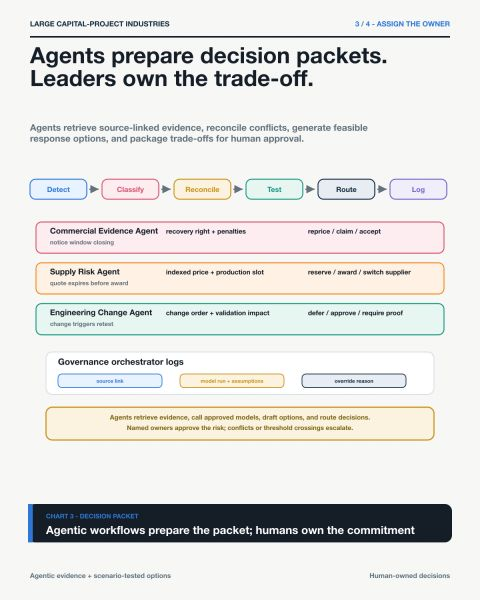
Agentic workflows can help by creating a shared decision packet: evidence, conflicts, recovery rights, feasible options, model assumptions, and the human owner of the trade-off. The AI is not the decision-maker. It is the coordination layer.
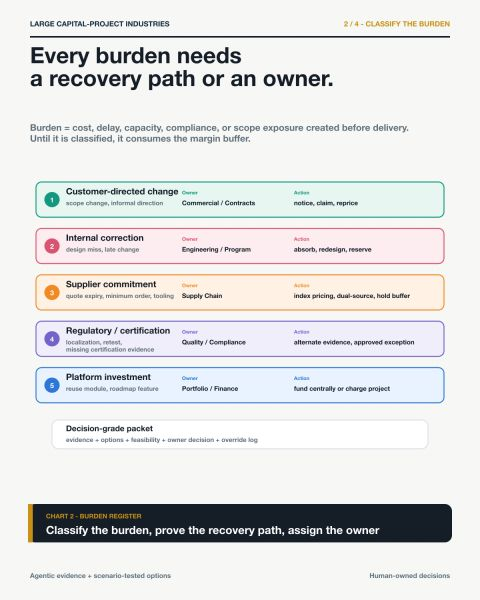
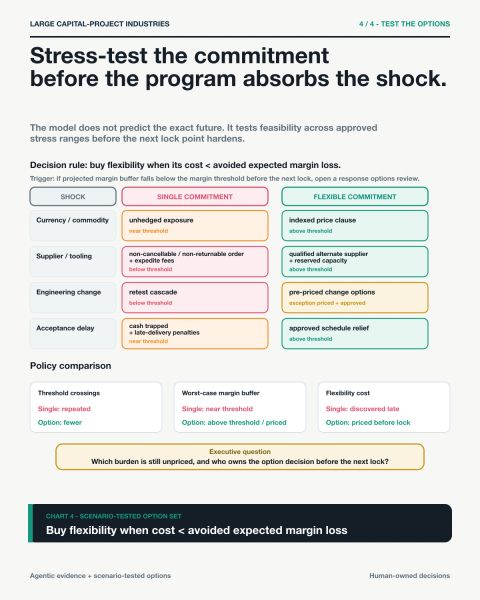
For long-cycle, high-mix, low-volume industries, resilience is not about forecasting perfectly. It is about making commitments that stay feasible when the future moves. That means classifying the burden early, proving the recovery path, assigning the owner, and testing options before the next lock point hardens.